
Microbial air monitoring: methods and applications
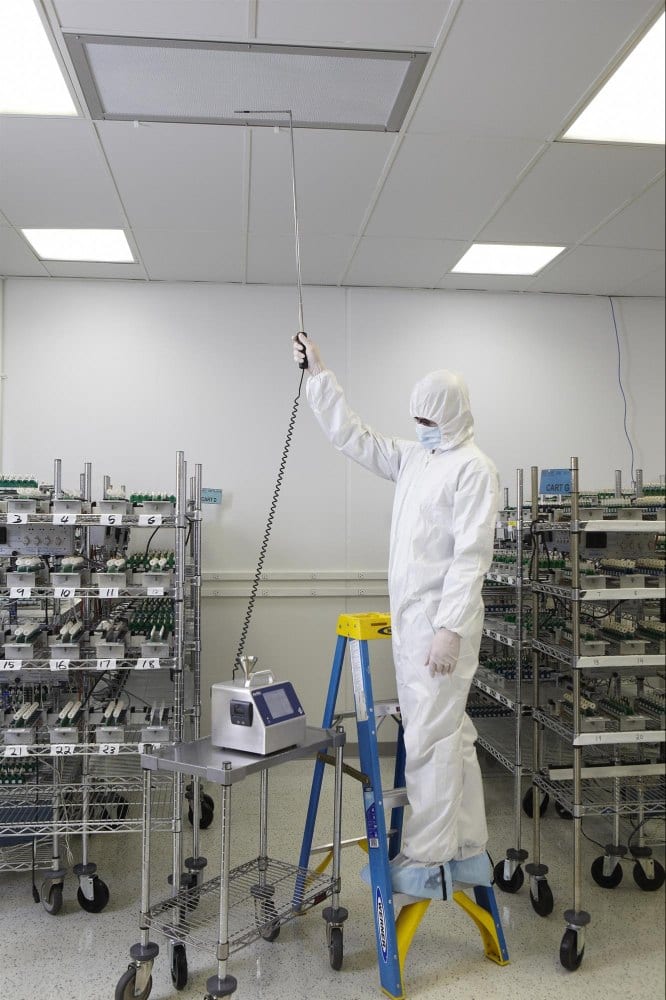
Microbial air monitoring involves measuring the presence of viable (living) microorganisms in the air. It is a critical part of environmental monitoring in cleanrooms, pharmaceutical production, food production and hospitals.
Why microbial monitoring?
Airborne microorganisms – bacteria, fungi and mould spores – can contaminate products, compromise sterility and pose health risks. Monitoring provides:
- Process safety – verify that the cleanroom and processes are functioning
- Trend analysis – identify deviations before they become problems
- Regulatory compliance – meet GMP, FDA and industry standards
- Documentation – evidence for audits and regulatory inspections
Sampling methods
Active air sampling
An air sampler draws in a known volume of air and collects microorganisms on an agar plate or in liquid. The standard method is defined in EN 17141 (formerly ISO 14698-1).
Advantages: quantitative, reproducible, standardised.
Passive sampling (settle plates)
Agar plates are exposed open for a defined period to capture settling particles.
Advantages: simple, complementary, shows contamination risk over time.
Contact plates
Used for surface sampling – not air sampling per se, but an important part of the overall monitoring programme.
Standards and reference values
- EN 17141 – replaces ISO 14698 as the European standard for microbial control in cleanrooms
- EU GMP Annex 1 – specifies limits per GMP class
- USP – US Pharmacopeia guidelines
GMP limits for airborne microbiology
| GMP Class | Active sampling (CFU/m³) | Settle plate 90mm (CFU/4h) |
|---|---|---|
| Grade A | <1 | <1 |
| Grade B | 10 | 5 |
| Grade C | 100 | 50 |
| Grade D | 200 | 100 |
How we help
We perform microbial air sampling with qualified equipment and deliver results with complete documentation. We can support you with method selection, sampling plans and interpretation of results.
Read more about cleanroom air monitoring.
Frequently asked questions
Active sampling draws in a known volume of air and provides quantitative results (CFU/m³). Passive sampling with settle plates measures sedimentation over time and provides a complementary picture.
The frequency depends on the cleanroom class and regulatory requirements. GMP Grade A/B typically requires sampling with each batch. Lower classes may have weekly or monthly sampling.
Elevated results should be investigated according to a predefined deviation procedure. This may involve increased sampling frequency, root cause analysis and corrective actions.
EN 17141:2020 has replaced the ISO 14698 series as the European standard for microbial control in cleanrooms and controlled environments.
More articles
What is air sampling and when is it needed?
An introduction to air sampling – what it involves, which situations require it, and what to expect from the process.
How to interpret an air sampling report
A guide to understanding your air sampling report – what the results mean, how they compare against reference values, and what actions may be required.
EU GMP Annex 1: requirements for air monitoring in pharmaceutical production
EU GMP Annex 1 sets strict requirements for air monitoring in aseptic production. Read about what is required for particle counting, microbial sampling and documentation.