Hospitals & Clinics
Air sampling in operating theatres, sterilisation units and cleanroom environments within healthcare. Control of microbiological purity and particle levels for patient safety and infection control.
Where healthcare relies on controlled air
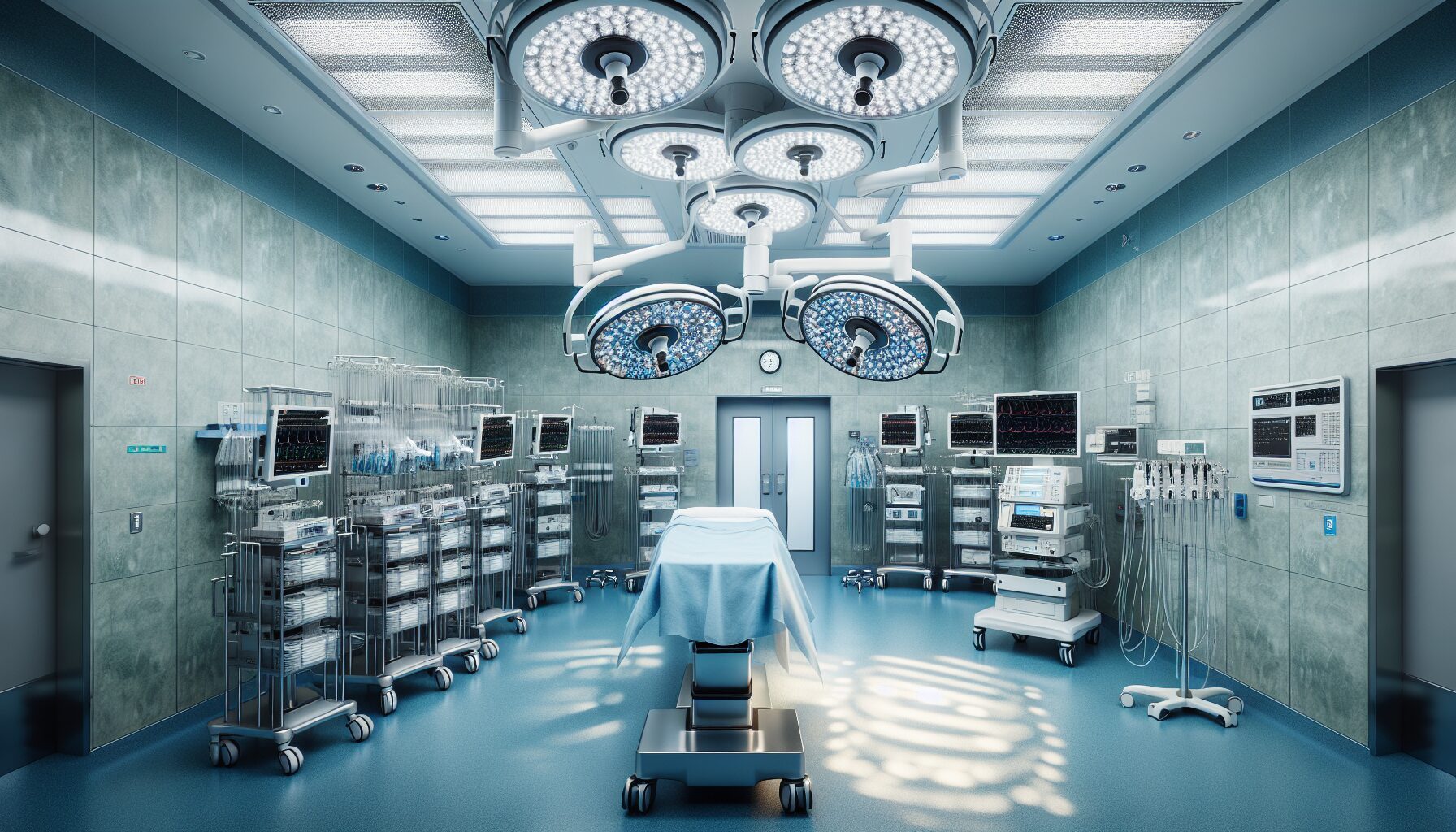
Contamination control in healthcare spans several distinct settings: operating theatres, sterile processing and sterilisation units, and pharmacy compounding areas where sterile preparations are made. Each is a controlled environment in the same sense as an industrial cleanroom, built around the same underlying measurement discipline – but in healthcare the environment exists to protect the patient rather than a manufactured product.
Why airborne contamination matters when the product is patient safety
Airborne particles and microorganisms can settle on an open surgical site, on instruments during reprocessing, or into a sterile preparation during compounding. Controlling the air in these spaces is one part of a much broader infection-control and quality framework that healthcare facilities already run – air sampling doesn't replace that framework, it provides objective, repeatable data on one part of it: what's actually in the air where it matters.
Particle counting and microbial sampling in clinical settings
The same two measurements used in any cleanroom apply here. Particle counting measures airborne non-viable particles and supports classification of the space under ISO 14644-1. Microbial air sampling captures viable microorganisms on an agar medium for incubation and counting, which is typically the more directly relevant measurement in a clinical setting, since it's viable contamination that carries an infection-control risk. Most healthcare environmental monitoring programmes run both side by side rather than relying on either alone.
Working around a live clinical schedule
Operating theatres and sterile units rarely stand empty, so measurement has to be planned around the clinical schedule rather than the other way round. We plan sampling to fit around surgical lists and processing windows in sterile services, and can measure in the occupancy state that's actually relevant – at rest between cases, or in operation during a representative period of clinical activity – as part of an ongoing environmental monitoring programme rather than a single visit, depending on what your facility needs to show.
Sterile processing and pharmacy compounding
Sterile processing and decontamination units reprocess instruments between uses, and depend on controlled air to keep reprocessed instruments from picking up contamination before they're packaged and stored. Pharmacy compounding rooms, where sterile preparations are mixed on-site, face a related but distinct risk: the air itself can introduce contamination directly into a preparation during compounding, part of why compounding areas are typically treated as a cleanroom in their own right rather than an extension of the pharmacy floor.
Compact, quiet instruments for occupied clinical spaces
Instrument choice matters more here than in an empty industrial cleanroom, because measurement often happens while people are present. Our microbial air sampler runs under 60 dB(A) and weighs under two kilograms with its sampling head, which makes it practical to move between an operating theatre, a sterile processing area and a compounding room in the same visit without disrupting the people working in them. Portable particle counters cover the same ground for non-viable measurement, moving between rooms rather than needing a fixed installation in each one.
Calibration and documentation for regulated healthcare environments
Instruments used for hospital and clinic air monitoring are calibrated on a recurring schedule with a traceable certificate, the same standard we apply to any regulated cleanroom instrument. Results are delivered in a report that supports internal quality assurance and any external audit or inspection your facility undergoes, without us asserting what a specific national healthcare standard requires – that determination sits with your own infection-control and quality teams, working from the standards that apply to your facility.
See our guide to microbial air monitoring for more on the active and passive sampling methods behind these results – the same techniques described there apply directly to operating theatres, sterile processing units and compounding areas.
Frequently asked questions
Frequently asked questions
Operating theatres, sterile processing and sterilisation units, and pharmacy compounding areas where sterile preparations are made – each a controlled environment measured with the same underlying disciplines as an industrial cleanroom.
Particle counting measures all airborne particles, viable or not, and supports ISO 14644-1 classification. Microbial sampling specifically captures viable microorganisms for incubation and counting, which is usually the more directly relevant measurement where infection control is the concern. Most programmes run both.
Yes. We plan sampling around your clinical schedule and can measure at rest between cases or in operation during representative activity, whichever your assessment calls for.
Yes, on a recurring schedule with a traceable calibration certificate, the same standard we apply to any regulated cleanroom instrument.
Related services
Cleanroom
We offer complete air monitoring for cleanrooms – from particle counting and microbiological sampling to cleanroom class...
Learn moreMicrobial Air Sampling
Microbial air sampling measures the concentration of viable microorganisms in the air – critical in cleanrooms, aseptic ...
Learn moreEnvironmental Monitoring
Environmental monitoring (EM) is the ongoing programme that demonstrates your cleanroom continues to meet requirements b...
Learn moreParticle Counting
Particle counting measures the level of airborne particles in cleanrooms and controlled environments – the foundation fo...
Learn moreCalibration
Correctly calibrated instruments are the foundation for reliable measurement results. We offer professional calibration,...
Learn more
Need help?
Contact us for a free assessment of your air monitoring and particle counting needs.