Products
Filter Testing
DOP/PAO-based integrity testing of HEPA and ULPA filters in cleanrooms and isolators.
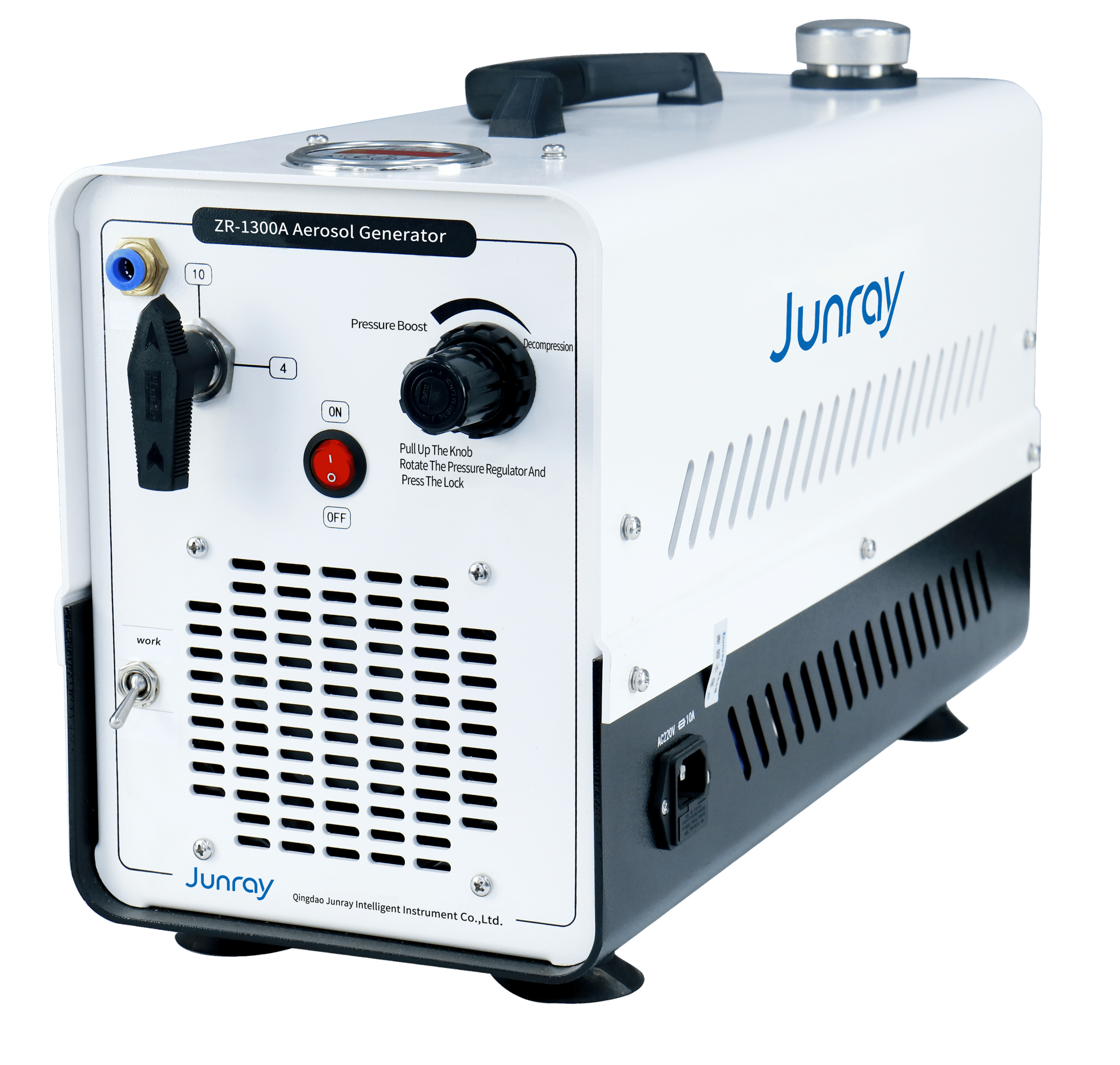
Aerosol Generator ZR-1300A
DOP aerosol generator for HEPA filter testing and cleanroom validation
The ZR-1300A Aerosol Generator is a specialised instrument for generating DOP aerosol using Laskin nozzles. The embedded adjusting valve controls the operation of 4 or 10 nozzles. At airflow rates of 1.4–56.6 m³/min the output aerosol concentration is 10–100 μg/L. Performance complies with national standards and the device is suitable for medical device testing institutes, centres of disease control, hospitals, pharmaceutical companies and HEPA filter manufacturers, for leakage testing of cleanrooms and HEPA filters.
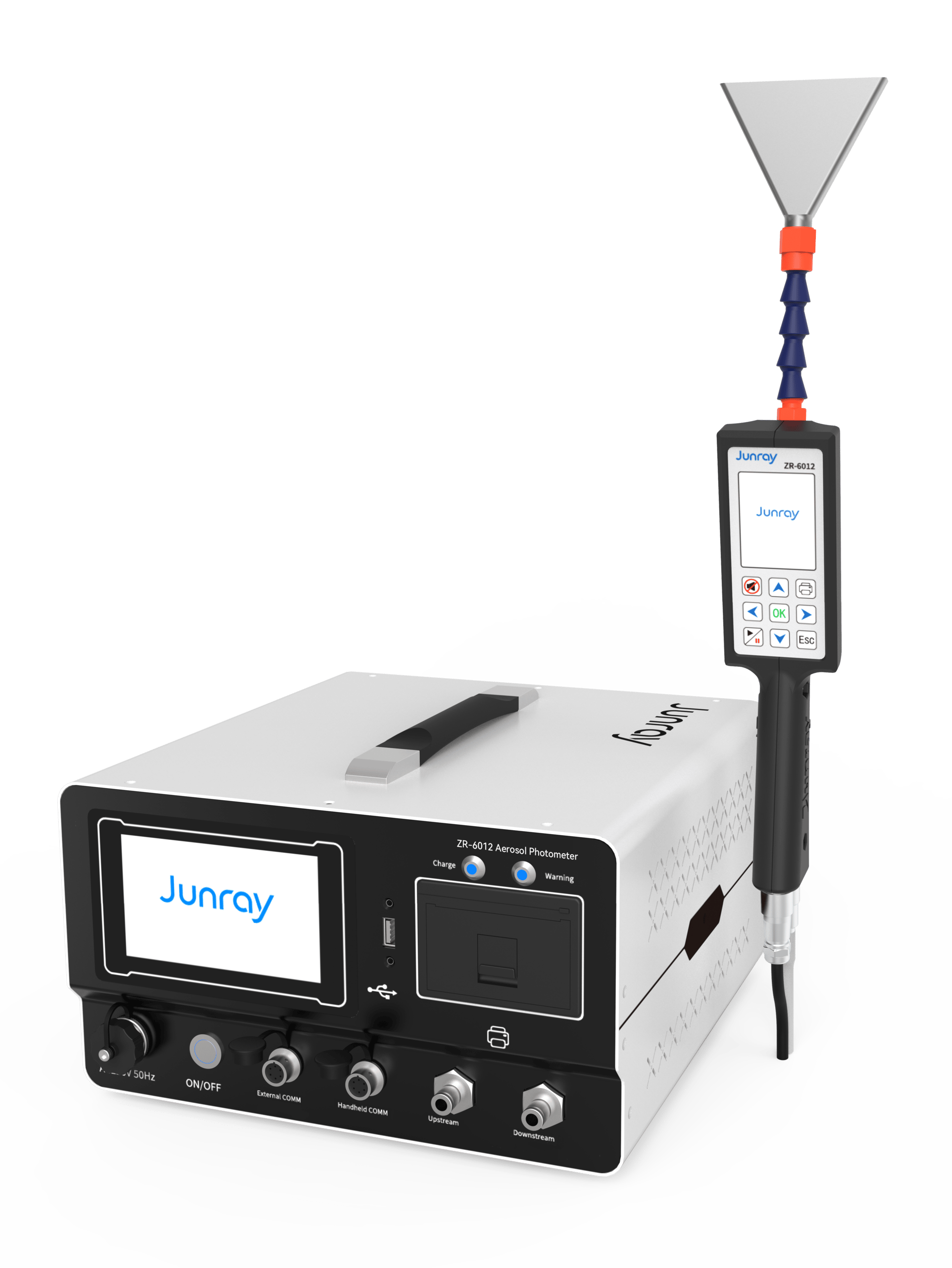
Aerosol Photometer ZR-6012
Portable aerosol photometer for HEPA/ULPA filter integrity testing
The ZR-6012 Aerosol Photometer is designed based on Mie scattering theory and is specialised equipment used to test for leakage in high efficiency particulate air (HEPA) filters. The instrument complies with relevant national and industrial standards, can quickly test the upstream and downstream aerosol concentrations of HEPA filters and displays the leakage rate in real time. Suitable for leakage detection in cleanrooms, laminar flow tables, biosafety cabinets, glove boxes, HEPA vacuum cleaners, HVAC systems, HEPA filters, negative pressure filter devices, operating rooms and nuclear filtration systems.
Compare specifications
| Model | Operating pressure | Particle production | Concentration (5.6 m³/min) | Concentration (56.6 m³/min) | Generation method | Compressor | Noise | Dimensions | Weight | Power | Measurement principle | Sampling flow rate | Measurement range | Leakage rate range | Precision | Repeatability | Aerosol agent | Data storage | Display | Battery | HEPA filtered exhaust | Operating temperature | Power supply | Power consumption | Dimensions (W × D × H) |
|---|---|---|---|---|---|---|---|---|---|---|---|---|---|---|---|---|---|---|---|---|---|---|---|---|---|
| ZR-1300A | 60–150 kPa | 1.4–56.6 m³/min | 100 μg/L | 10 μg/L | 4–10 Laskin nozzles | Built-in | <65 dB(A) | 200 × 500 × 280 mm | Approx. 18 kg | ≤500 W | – | – | – | – | – | – | – | – | – | – | – | – | – | – | – |
| ZR-6012 | – | – | – | – | – | – | <65 dB(A) | – | 8.9 kg (15 kg packed) | – | Mie scattering (photometric) | 28.3 L/min (±2.5%) | 0.0001–700 μg/L | 0.0001%–100% | 1% of value (0.01%–100% range) | 0.5% of value (0.01%–100% range) | PAO, DOP and other aerosol types | 100 000 groups | 5-inch colour touchscreen | 4 hours continuous operation | Rating 0.01 μm | 10–35 °C | AC 110–240 V, 50/60 Hz | <150 W | 300 × 330 × 184 mm |
What filter integrity testing proves
A HEPA or ULPA filter is rated in the laboratory before it is installed — EN 1822 classifies the medium's efficiency at the most penetrating particle size. That rating says nothing about the filter once it is mounted in a ceiling grid or a housing. A pinhole in the medium, a poorly seated gel seal, a hairline gap in the frame: none of these change the filter's class, and all of them let unfiltered air past.
Integrity testing is what closes that gap. It is performed in place, after installation, and it is the step that establishes whether a correctly specified filter is actually performing where it sits.
Why the test needs two instruments
The method is comparative. A challenge aerosol of known concentration is introduced upstream of the filter, and the downstream side is scanned for what gets through. Penetration is expressed as a percentage of the upstream concentration, so both halves have to be measured with the same instrument chain.
That is why this category contains a generator and a photometer rather than a single device. The ZR-1300A produces the challenge aerosol; the ZR-6012 measures upstream and downstream and reports the leakage rate.
ZR-1300A — the challenge aerosol
The ZR-1300A generates DOP aerosol using Laskin nozzles, with an adjusting valve selecting between 4 and 10 nozzles. Across airflow rates of 1.4–56.6 m³/min it produces an output concentration of 10–100 μg/L — 100 μg/L at 5.6 m³/min, falling to 10 μg/L at 56.6 m³/min as the same aerosol output is spread through more air.
It runs at 60–150 kPa with a built-in compressor, stays below 65 dB(A), and weighs approximately 18 kg.
ZR-6012 — measuring what gets through
The ZR-6012 is a photometer working on Mie scattering. It samples at 28.3 L/min (±2.5%) and measures across a range of 0.0001–700 μg/L, expressing leakage from 0.0001% to 100% with 1% precision and 0.5% repeatability over the 0.01%–100% range.
It accepts PAO, DOP and other aerosol agents, and its listed standards span ISO 14644-3, GMP, NSF/ANSI 49-2024, BS EN 12469:2000 and IEST-RP-CC034 — the frameworks that govern cleanroom, biosafety cabinet and LAF bench testing respectively.
Where integrity testing applies
Per the product data, both instruments are used in cleanroom validation, pharmaceutical production, hospitals and infection control, and by HEPA filter manufacturers. The ZR-6012 additionally covers biosafety cabinets and LAF benches, where the filter protects an operator rather than a product.
The filters being tested are the terminal filters in our cleanroom panel range — see the HEPA and ULPA terminal filters for the EN 1822 classes involved.
Frequently asked questions about filter testing
The test is comparative: it measures how much of a known upstream challenge concentration appears downstream. The ZR-1300A creates that challenge aerosol and the ZR-6012 measures both sides and reports the leakage rate. Neither instrument produces a result on its own.
EN 1822 classifies the filter medium's efficiency under laboratory conditions before installation. An integrity test is performed in place, after installation, and detects leaks in the medium, the seal or the frame — faults that do not change the filter's class but do let unfiltered air past.
The product data lists PAO, DOP and other aerosol types. The ZR-1300A generates DOP aerosol via Laskin nozzles.
Yes. The ZR-6012's listed applications include biosafety cabinets and LAF benches alongside cleanroom validation, and its standards include NSF/ANSI 49-2024 and BS EN 12469:2000, which cover cabinet testing.

Need help choosing the right equipment?
Contact us for advice on which equipment suits your operations.