Particle Counting in Cleanrooms – Measurement and Classification of Airborne Particles
Particle counting measures the level of airborne particles in cleanrooms and controlled environments – the foundation for cleanroom classification according to ISO 14644 and for particle monitoring according to EU GMP Annex 1. We carry out air particle measurement on-site with calibrated particle counters and deliver a clear report with results, class and assessment against applicable limits – ready for audit.
What is particle counting in cleanrooms?
In short: Particle counting measures the number of airborne particles per size range (e.g. ≥0.5 µm and ≥5.0 µm) using optical particle counters. The result is expressed as particles per cubic metre and forms the basis for cleanroom classification according to ISO 14644-1.
What is the difference from microbial sampling?
In short: Particle counting measures all airborne particles (non-viable), regardless of whether they are living or not. Microbial sampling specifically measures viable microorganisms (viable, CFU). In cleanrooms and GMP environments, both are usually required.
Which standards apply?
In short: The key standards are ISO 14644-1 (classification by particle concentration), ISO 14644-2 (monitoring), ISO 21501-4 (calibration of optical particle counters) and EU GMP Annex 1 (particle monitoring in aseptic production).
Can you classify our cleanroom?
In short: Yes. We carry out particle counting according to ISO 14644-1 and deliver a classification result with complete documentation, ready for audit.
When is this relevant?
- Cleanroom classification – establish or verify cleanroom class according to ISO 14644-1
- EU GMP Annex 1 – particle monitoring (non-viable) in Grade A–D during aseptic production
- Validation & recurring control – for new premises, refurbishment or periodic reclassification
- Electronics & semiconductors – control of particle levels in cleanrooms for sensitive production
- Troubleshooting – locate sources of elevated particle levels
- As part of an environmental monitoring programme – the non-viable component of a complete EM setup
What is included
- Needs analysis of the environment, target class and applicable regulations
- Sampling plan according to ISO 14644-1 – number of sampling points, air volume and placement
- Particle counting with calibrated optical particle counters (ISO 21501-4)
- Measurement in the selected occupancy state – as-built, at-rest or in-operation
- Measurement of standard sizes ≥0.5 µm and ≥5.0 µm (additional sizes as needed)
- Cleanroom classification according to ISO 14644-1 with classification result
How it works
Needs analysis
We review the environment, target class and which regulations apply.
Sampling plan
Number of sampling points, air volume and occupancy state are established according to ISO 14644-1.
On-site measurement
Carried out with calibrated particle counters (traceable calibration according to ISO 21501-4).
Report
Particle levels, classification and assessment against limits, with recommendations.
What you receive
- Measurement report with particle levels per sampling point and size range
- Cleanroom classification according to ISO 14644-1 with classification result
- Assessment against limits for the applicable cleanroom class
- Traceable documentation from ISO 21501-4-calibrated instruments
- Audit-ready documentation with recommendations
Industries we serve
Cleanroom
Complete air monitoring for cleanrooms – particle counting, microbiological samp...
Hospitals & Clinics
Air sampling in operating theatres, sterilisation units and cleanroom environmen...
Pharmaceuticals & Biotech
Microbiological air monitoring in cleanrooms, aseptic production and sterility t...
Electronics (Cleanroom)
Semiconductor and electronics production demands extremely particle-free environ...
Equipment
Related instruments
We sell and calibrate instruments used for this type of sampling.
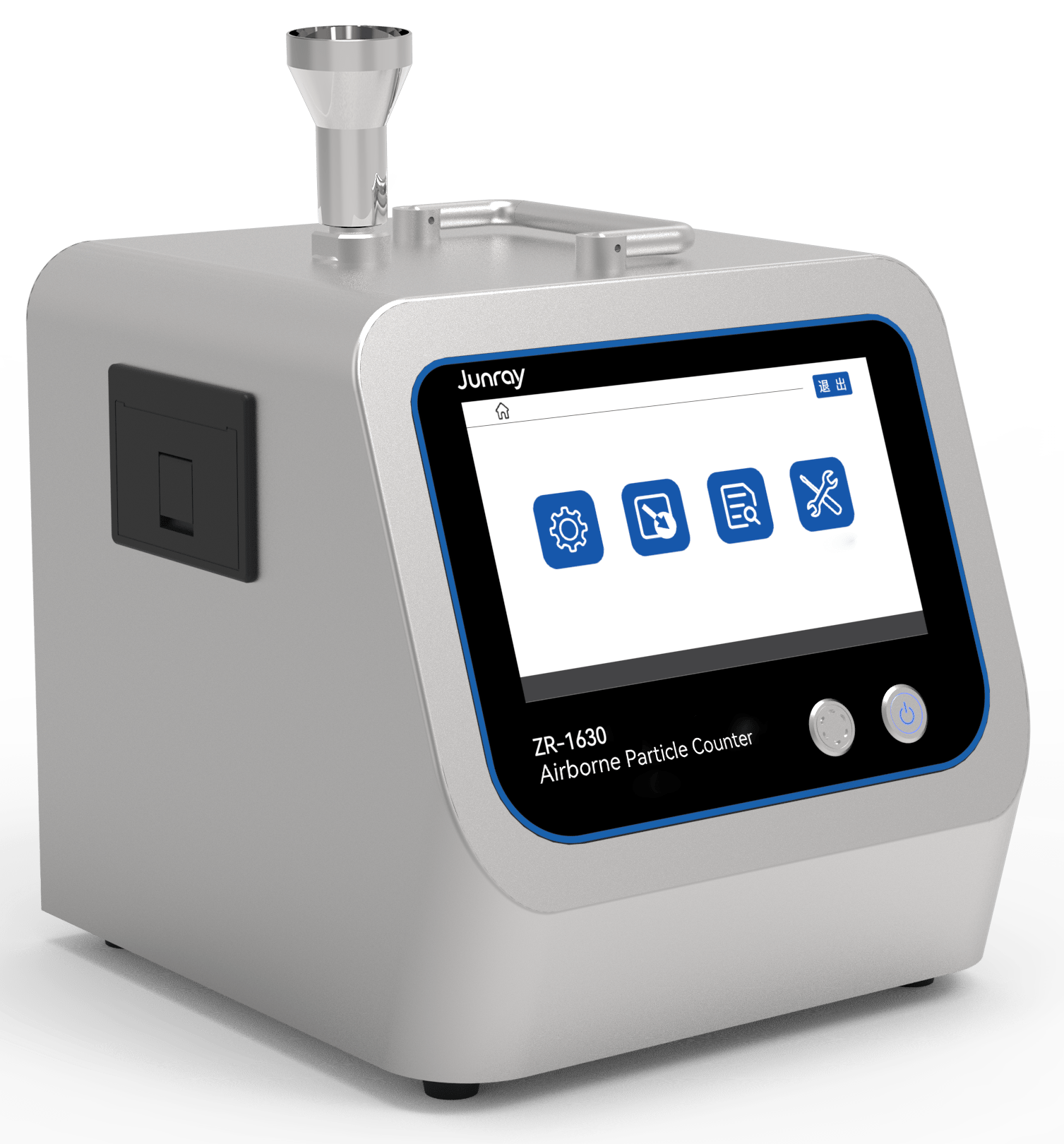
ZR-1630
Portable 6-channel particle counter – 28.3 L/min
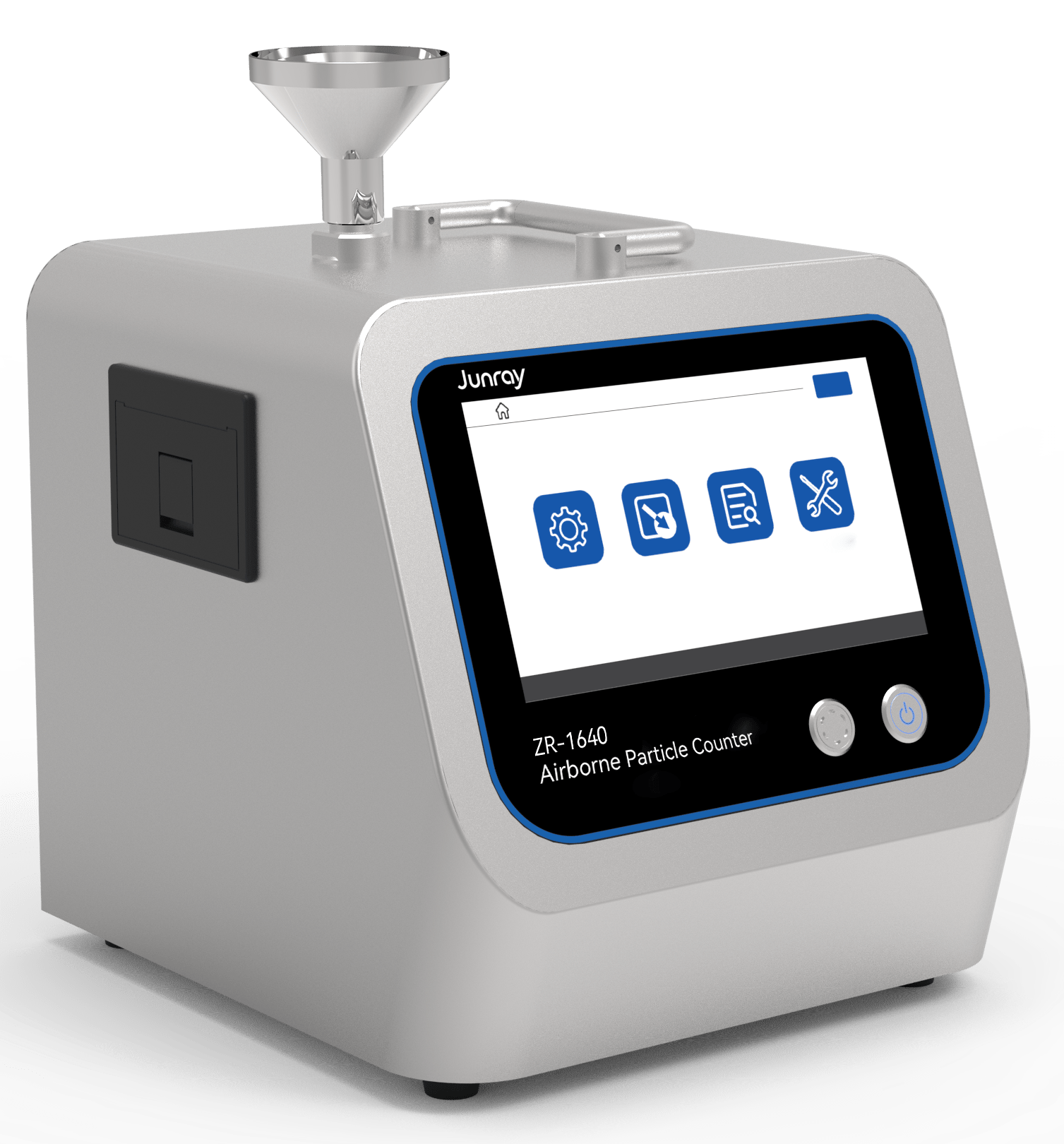
ZR-1640
Portable 6-channel particle counter – 100 L/min
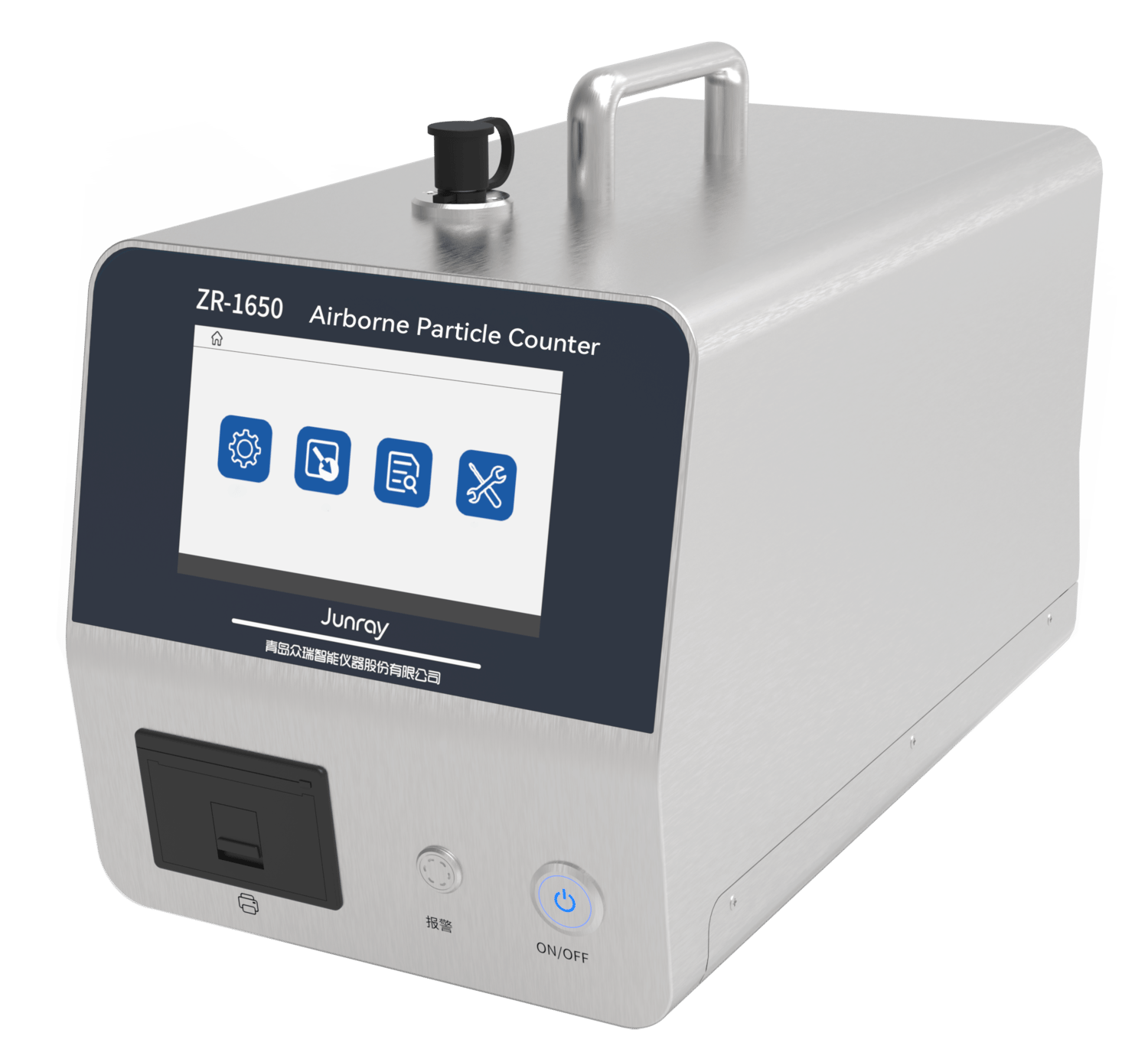
ZR-1650
High-precision 9-channel particle counter – 0.1 μm
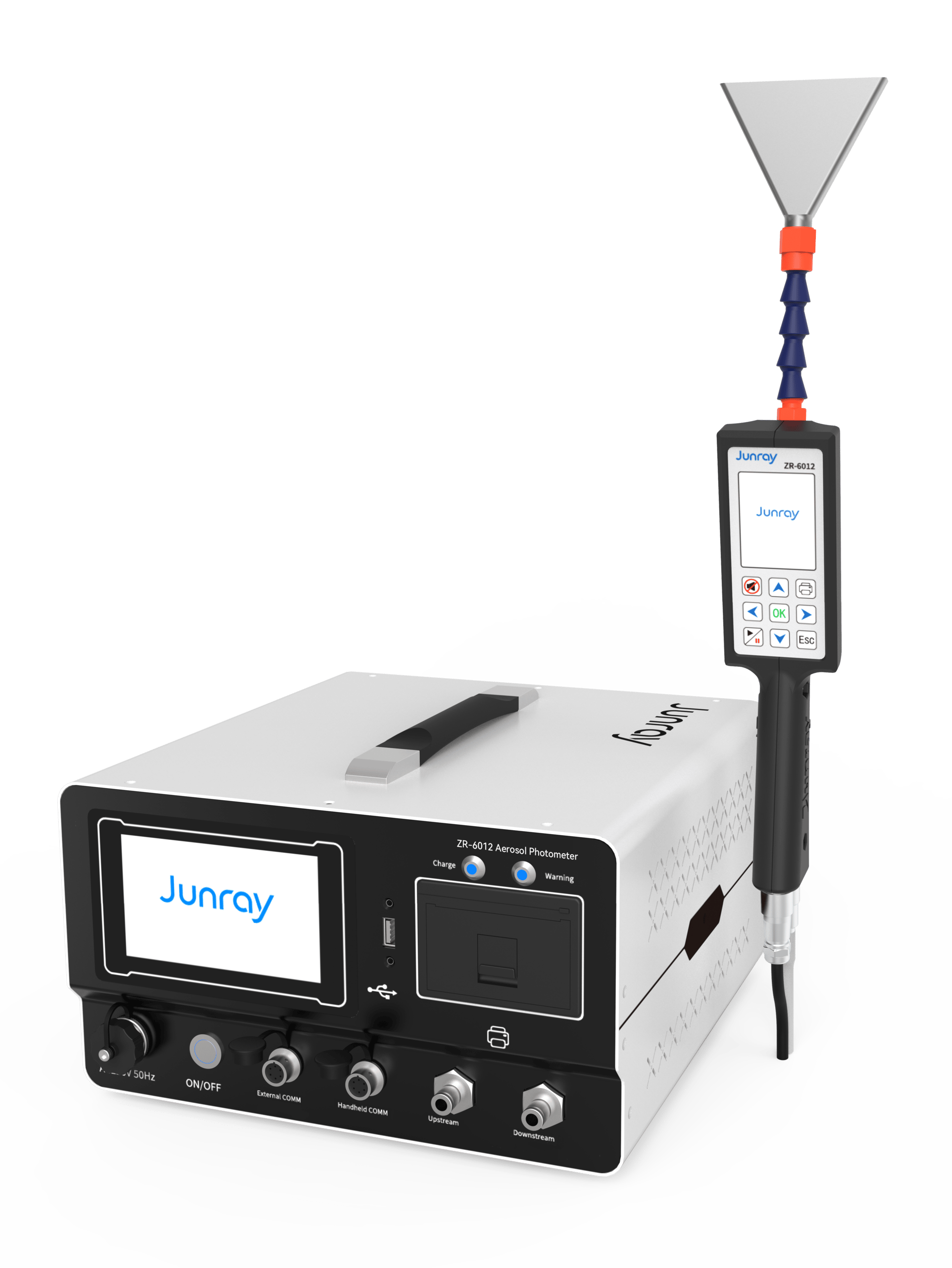
ZR-6012
Portable aerosol photometer for HEPA/ULPA filter integrity testing
Frequently asked questions about particle counting
Particle counting measures all airborne particles (non-viable), regardless of whether they are living or not. Microbial sampling specifically measures viable microorganisms (viable, CFU). In cleanrooms and GMP environments, both are usually required.
Typically ≥0.5 µm and ≥5.0 µm, the sizes ISO 14644-1 uses for classification. Other sizes can be measured as needed.
Yes. We carry out particle counting according to ISO 14644-1 and deliver a classification result with complete documentation.
This is determined by cleanroom class and regulations. Classification is carried out periodically, while ongoing particle monitoring can be part of an environmental monitoring programme.
Contact
Book a free assessment
Describe your situation and we will carry out an assessment and get back to you with a proposal and quote.
What happens next?
Quick response
We get back to you within 1 business day
3-5 questions
We ask questions to find the right approach
Proposal + quote
You receive a tailored proposal

Get a Quote Within 48 Hours
Tell us about your facility and requirements — we'll respond with a detailed proposal within two business days.