
Particle counter calibration: why, how often and what is required
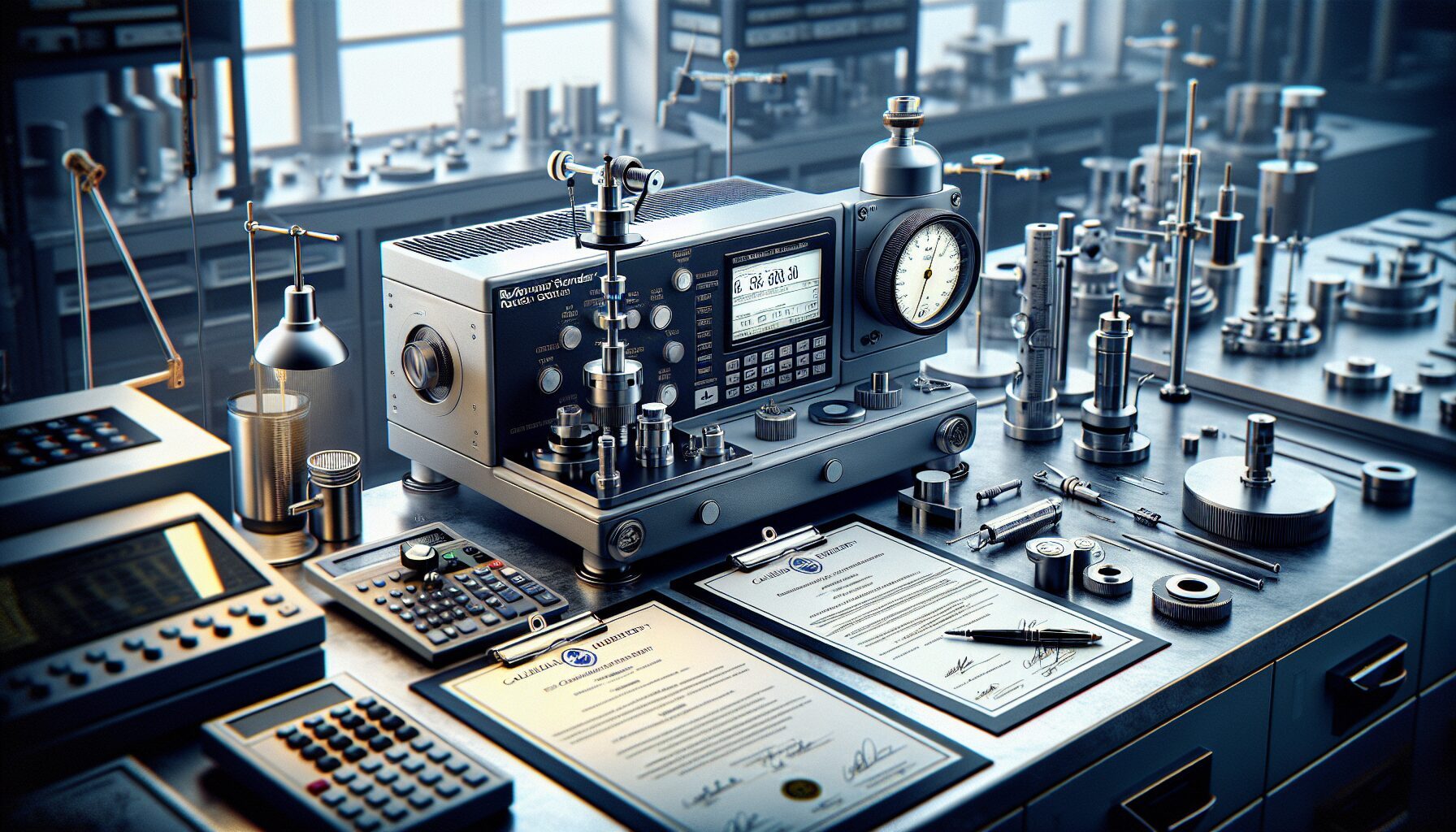
A particle counter that is not correctly calibrated produces unreliable measurement results. In regulated environments such as pharmaceutical production, incorrect measurements can lead to serious consequences – from production shutdowns to product recalls.
Why is calibration important?
- Reliability – calibration ensures the instrument measures correctly
- Traceability – measurement results can be traced back to international reference standards
- Compliance – GMP and ISO 14644 require calibrated instruments
- Qualification – calibration is a prerequisite for IQ/OQ
ISO 21501-4: the standard for particle counters
ISO 21501-4 defines requirements for calibration and verification of optical particle counters:
- Particle size – verification with PSL particles (Polystyrene Latex)
- Counting efficiency – 50% ±20% at the smallest particle size (per ISO 21501-4)
- False counts – maximum one false count per 5 minutes
- Flow rate – flow accuracy must be ≤±5%
- Size resolution – specified for each channel
How often should calibration be performed?
Most standards and manufacturers recommend annual calibration. However:
- GMP environments may require shorter intervals based on risk assessment
- Critical applications may justify semi-annual calibration
- Transport damage may require immediate recalibration
- Deviating results may prompt an unscheduled calibration
What does a calibration include?
1. Functional check – overall check of the instrument's status
2. Flow verification – check and adjustment of airflow
3. Particle size verification – measurement with reference particles
4. Counting efficiency – verification of detector performance
5. Certificate – traceable calibration certificate with all results
Read more about our calibration service.
Frequently asked questions
The price depends on the instrument model and the scope of calibration. Contact us for a quote.
We calibrate Junray instruments and in many cases can also calibrate instruments from other manufacturers. Contact us with your model.
If the instrument does not meet specification after adjustment, we contact you with a repair proposal and quote.
The calibration certificate documents which reference instruments and standards were used, with a full traceability chain.
More articles
What is air sampling and when is it needed?
An introduction to air sampling – what it involves, which situations require it, and what to expect from the process.
How to interpret an air sampling report
A guide to understanding your air sampling report – what the results mean, how they compare against reference values, and what actions may be required.
EU GMP Annex 1: requirements for air monitoring in pharmaceutical production
EU GMP Annex 1 sets strict requirements for air monitoring in aseptic production. Read about what is required for particle counting, microbial sampling and documentation.